
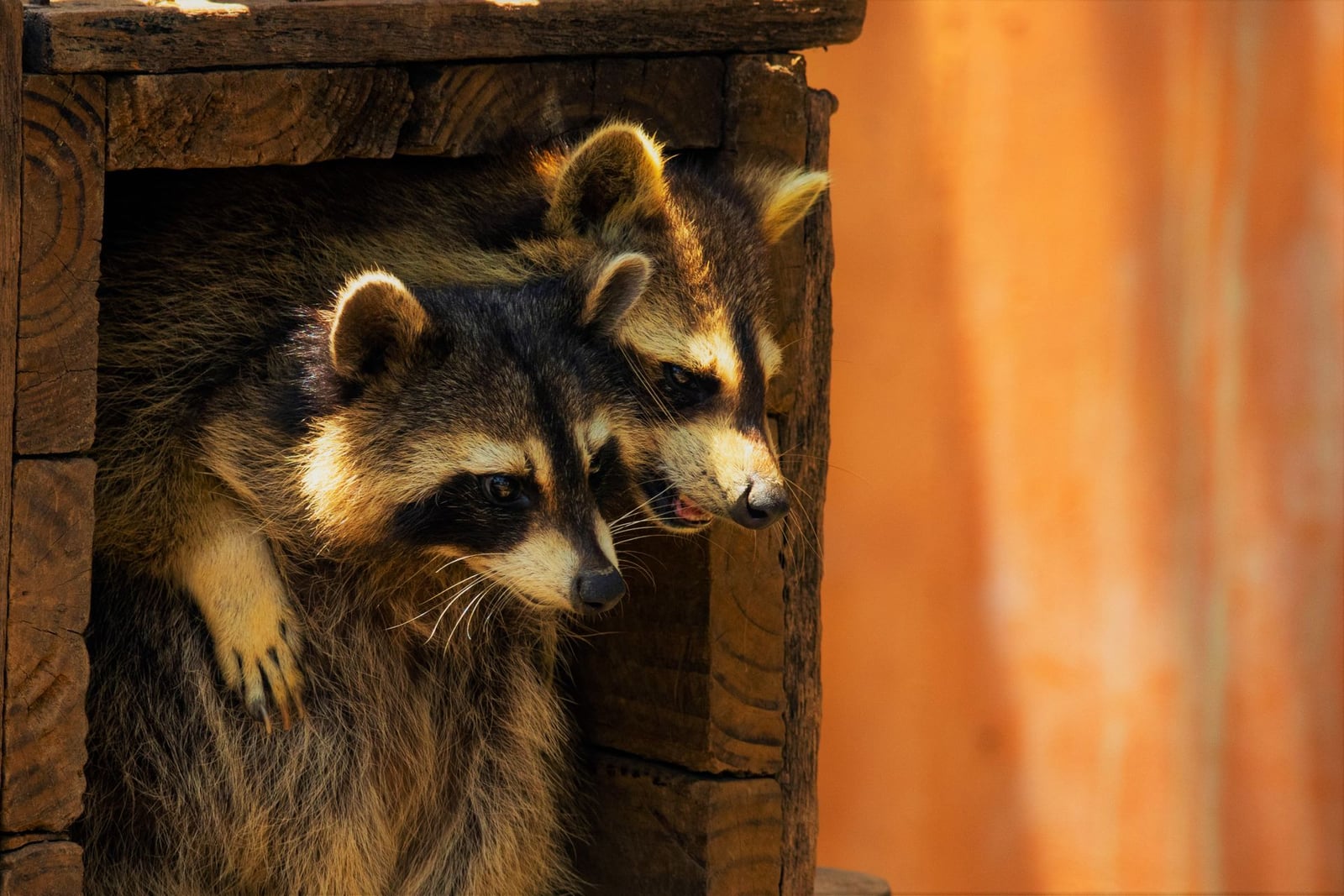
Most homeowners picture wind, rain, sun, and age when they think about what's slowly wearing down a roof. Wildlife rarely makes that list, and yet raccoons, squirrels, and birds account for a real, recurring category of roof damage, one that often starts small and quiet before it becomes an expensive, obvious problem.
Raccoons: The Most Destructive Roof Intruder
Raccoons are strong, persistent, and genuinely good at finding a weak point. They pull apart shingles and roofing material to create their own entry holes into an attic when they're looking for a den, especially a female preparing to have young. Once inside, a raccoon can cause real structural damage tearing through insulation and decking, and a full remediation, wildlife removal, attic cleanup, and structural repair combined, can run $5,000 to $15,000 or more depending on how long the animal has been in there before anyone notices.
Squirrels: Smaller Animal, Real Fire Risk
Squirrels do less brute-force damage than raccoons but bring their own specific danger. They chew, constantly, and that habit extends to electrical wiring once they're inside an attic, creating a genuine fire hazard that has nothing to do with the roof itself but everything to do with how they got there. They're also capable of peeling up shingles and chewing through roof decking to establish an entry point, usually near a roofline where a tree branch gives them easy access.
Birds: Vents, Gutters, and a Federal Law Most Homeowners Don't Know About
Birds cause a different kind of problem. They bring nesting material into ridge vents and soffit vents, which blocks the airflow our guide to attic ventilation and roof lifespan covers as essential, and they nest in gutters too, which contributes to the kind of clogging that leads to water backing up under the roof edge. Here's the part most homeowners genuinely don't expect: under the federal Migratory Bird Treaty Act, it's illegal to disturb an active nest that contains eggs or chicks, even if that nest is sitting in your own gutter or vent. You generally have to wait until the birds have left on their own. The one exception covers three unprotected species, house sparrows, European starlings, and rock pigeons, whose nests can be removed at any time.

Bats and the Acid in Their Droppings
Bats are less common but worth a mention, since they can squeeze into surprisingly small gaps at the roofline and roost in an attic without much visible sign at first. The real damage comes from their droppings over time, whose uric acid content eats away at shingles, flashing, and gutters, accelerating deterioration in whatever area they've settled into. Like birds, bats often have legal protections depending on species and location, so professional, humane removal is the right call rather than DIY exclusion.

Does Homeowners Insurance Cover Any of This?
Inconsistently. Many policies treat wildlife damage differently than vermin damage, and coverage often comes down to how an insurer classifies the specific animal and whether they can attribute the damage to deferred maintenance rather than a sudden, unavoidable event. Even when structural repairs are covered, the cost of actually removing the animal itself, sealing entry points, and disinfecting the attic usually isn't, since most policies draw a hard line between fixing what's broken and dealing with the wildlife that broke it. Typical repair costs alone run $500 to $2,500, with severe cases exceeding $10,000, and professional wildlife removal adds another $200 to $600 on top of that. Our guide on what homeowners insurance actually covers on a roof goes deeper into how these coverage gaps typically play out.

Signs You Already Have an Animal Problem
Scratching, scurrying, or thumping sounds at night, especially from the attic directly overhead, are usually the first thing homeowners notice. Beyond that, watch for displaced or damaged shingles concentrated in one spot rather than spread across the roof, visible gaps or holes at the roofline, and a persistent, unexplained odor that gets stronger near the attic access. Any of these on their own is worth a closer look before it turns into the kind of structural repair covered above.
Frequently Asked Questions
What animals commonly damage roofs in Southern California? +
Raccoons, squirrels, and various bird species are the most common culprits, with raccoons causing the most structural damage by pulling apart shingles and roofing material to create entry holes into the attic.
Is it illegal to remove a bird's nest from my roof vent? +
If the nest is active with eggs or chicks and belongs to a protected species, yes, under the federal Migratory Bird Treaty Act. Nests belonging to house sparrows, European starlings, and rock pigeons are the exception and can be removed at any time.
Does homeowners insurance cover animal damage to a roof? +
Sometimes, but not consistently. Many policies treat wildlife damage differently than vermin damage, and insurers often deny claims they can attribute to a lack of maintenance. Even when structural repairs are covered, the cost of actually removing the animal usually isn't.
How much does it cost to repair animal damage to a roof? +
Typical repairs run $500 to $2,500, with severe cases exceeding $10,000. Professional wildlife removal adds another $200 to $600 on top of the structural repair cost, and a full raccoon remediation with attic cleanup can run $5,000 to $15,000 or more.
What are the first signs of an animal getting into my attic? +
Scratching or scurrying sounds at night, displaced or damaged shingles, gaps or holes at the roofline, and a persistent odor from droppings are the most common early signs, often noticed before any visible structural damage shows up.
None of this is common in a well-maintained roof, but a small gap, a loose vent, or an overhanging branch is genuinely all it takes for something to notice and move in. A roof that's regularly checked for those weak points rarely becomes a wildlife problem in the first place.