
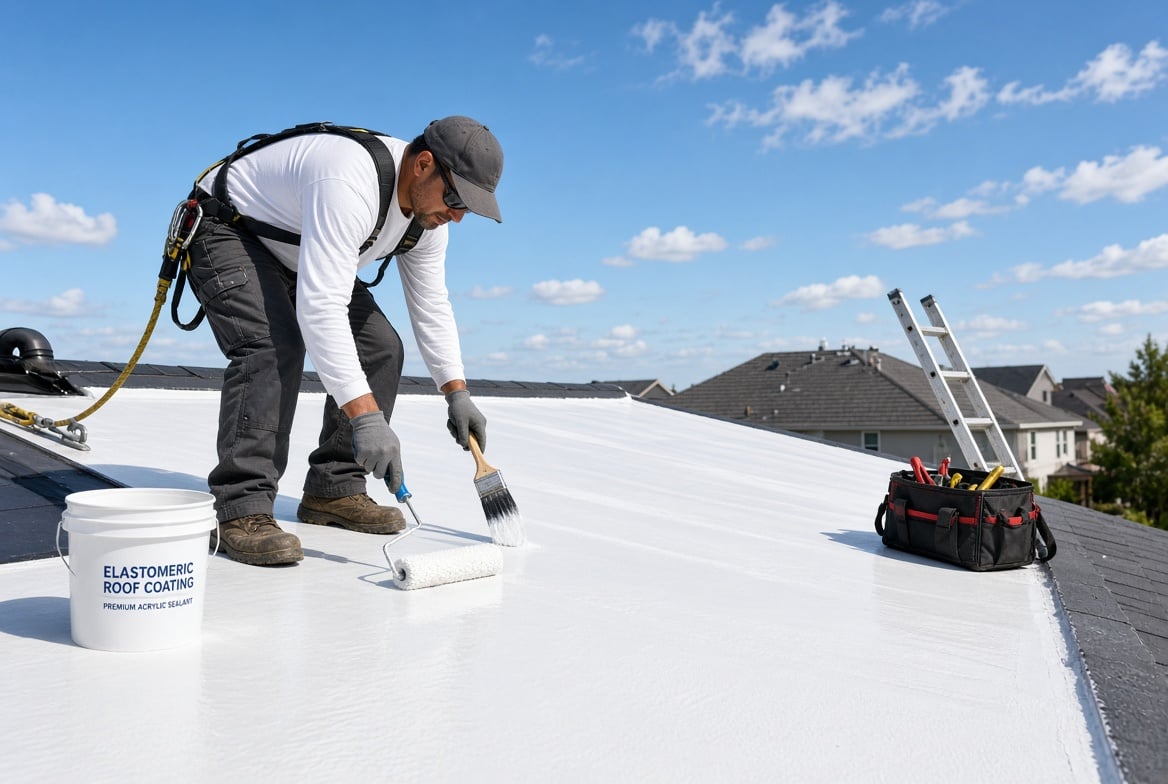
Homeowners ask us this a lot, usually after seeing a roof coating product advertised as a way to skip a full repair or replacement. The honest answer is that coating and sealant can genuinely extend the life of a roof, but only under the right conditions. Used on the wrong roof, or applied without addressing the actual problem underneath, they just delay a repair you were going to need anyway. Here is what these products actually do, where they help, and where they do not.
What Roof Coating and Sealant Actually Do
Roof coating and sealant serve two different purposes, even though people often lump them together. Sealant is used to close specific gaps, seams, and penetrations, like where a vent pipe meets the roofing material. Coating is applied over a broader area of the roof surface itself, usually to add a protective, often reflective layer on top of the existing material.
Neither one repairs structural damage, replaces missing roofing material, or fixes a roof that has already failed underneath. They work by protecting material that is still fundamentally sound, slowing down the rate at which it deteriorates.
Does Coating Actually Extend Repair Life?
In the right situation, yes. A coating applied to a roof that is still structurally sound, but showing early signs of UV wear or minor surface cracking, can genuinely add years to that roof's service life by protecting it from further sun and moisture exposure.
It does not work as a fix for a roof that already has active leaks from failed seams, damaged decking, or widespread material breakdown. Coating over a roof in that condition just traps the existing problem under a fresh layer, and it tends to fail again quickly once water finds its way back in.
Where Sealant Makes the Biggest Difference
Sealant does its best work at specific failure points rather than across a whole roof. Vent pipes, skylight edges, chimney flashing, and seams between roofing sections are where sealant breaks down first, usually from years of sun exposure drying it out until it cracks. A fresh, properly applied bead of sealant at these points can close off a leak source that would otherwise keep letting water in, regardless of how sound the rest of the roof is.

Warning Signs That Coating or Sealant Has Already Failed
- Chalky, powdery residue on the coating surface
- Visible cracking or peeling across the coated area
- Sealant that has hardened, shrunk, or pulled away from the surface it was applied to
- Water stains appearing despite a coated or sealed roof
- Bubbling or blistering in the coating layer
Once a coating starts showing this kind of breakdown, it is no longer doing its job, and reapplying more coating on top of failed coating rarely solves the underlying issue.

When Coating or Sealant Is Not Enough
A few situations where these products will not get you out of a repair:
- The roof deck underneath has already been damaged by water intrusion
- There is active, ongoing leaking rather than early wear
- The roofing material itself is past its expected service life
- Previous coating applications have already failed multiple times in the same spot
In any of these cases, coating is treating a symptom rather than the actual problem, and a proper inspection is worth getting before spending money on a product that will not hold.
Does Huntington Beach's Climate Affect How Well Coating Holds Up?
Coastal sun exposure is one of the main reasons coatings and sealants break down in the first place, since UV light is what dries out and cracks these materials over time. A reflective coating can help reduce some of that heat load on the roof surface, which is part of why they are popular here, but the coating itself is still subject to the same sun exposure and will need reapplication eventually, not a one time fix.
What a Properly Coated Roof Should Look Like
When coating is applied correctly, on a roof that is actually a good candidate for it, the result is a uniform, evenly applied surface with no missed spots, pooling, or thin patches. That even coverage is what actually determines how well it performs and how long it lasts.

Common Mistakes Homeowners Make
- Assuming coating can substitute for a repair when there is already an active leak
- Applying a new coating layer directly over a failed one without addressing why it failed
- Skipping surface prep, which is a major factor in how well a coating actually bonds and lasts
- Waiting until sealant has completely cracked away instead of catching it early
When to Call a Professional
If you are seeing any of the warning signs above, or you are not sure whether your roof is actually a good candidate for coating versus needing a real repair, that is worth a professional look before you spend money either way. A straightforward roof leak repair may be all a single failed seam needs, while widespread coating failure across an aging roof might point toward a full replacement instead. A professional inspection is the only reliable way to know which situation you are actually in.
Frequently Asked Questions
Does roof coating actually extend the life of a roof? +
Yes, when applied to a roof that is still structurally sound and showing early wear. Coating slows further sun and moisture damage, but it does not fix a roof that already has active leaks or damaged decking underneath.
Can roof coating replace a full repair? +
No. Coating protects material that is still fundamentally sound, but it will not repair structural damage, missing roofing material, or an already failed roof section.
How do I know if my roof coating has failed? +
Look for chalky or powdery residue, visible cracking or peeling, bubbling, or water stains appearing despite the coating being in place. Any of these mean the coating is no longer doing its job.
Is sealant the same thing as roof coating? +
No. Sealant closes specific gaps and seams, like around a vent pipe, while coating covers a broader area of the roof surface itself. They serve different purposes and are often used together.
Can I apply new coating over old, failed coating? +
It rarely solves the problem. Coating over failed coating without addressing why it failed usually just delays the same issue from resurfacing, sometimes quickly.
Does Huntington Beach's sun exposure affect how long coating lasts? +
Yes. UV exposure is one of the main reasons coatings and sealants break down over time, so a coated roof here will still need reapplication eventually rather than being a one time fix.
Roof coating and sealant genuinely extend repair life, but only when they are used on a roof that is still fundamentally sound and applied correctly to address specific wear points. They are not a substitute for a repair a roof already needs. If you are considering coating as a way to get more life out of your roof, get an honest assessment first so you know whether it is actually the right move for your specific situation.