
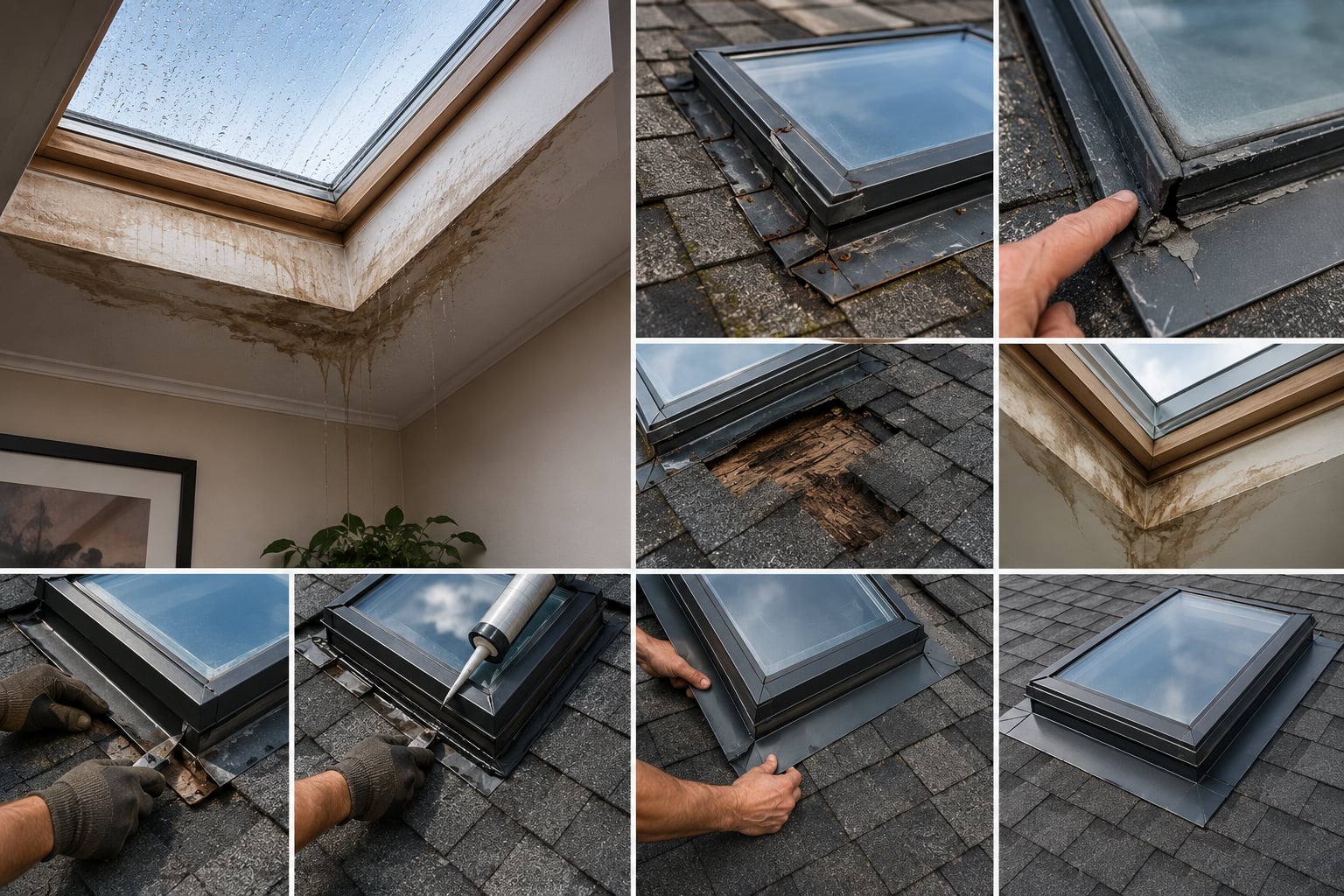
Skylights bring in natural light most homeowners love, but they also introduce a seam in the roof that has to be sealed correctly and stay that way for years. When something goes wrong, it's not always obvious whether you're looking at a real leak or something more benign. Here's what actually causes skylight leaks and how a proper repair works.
Why Skylights Are a Common Leak Point
A skylight is essentially a hole cut into the roof, sealed with flashing and glazing instead of continuous roofing material. That seam, where the skylight frame meets the surrounding roof, is inherently more vulnerable than an unbroken section of roof. It's the same basic reason chimneys and vent pipes are common leak points too, any roof penetration is a place water can potentially find a way in if the seal isn't intact.
Common Causes of Skylight Leaks
- Failed or cracked flashing around the skylight frame
- Deteriorated sealant or caulking that's dried out and pulled away
- Cracked or damaged glazing on the skylight dome or glass itself
- Debris or leaves blocking the small drainage channels around the frame
- Improper original installation, which can surface as a leak years later
- General age, seals and flashing both wear out over time regardless of how well they were installed

How to Tell a Skylight Leak From Condensation
This mix-up happens a lot. Condensation forms on the inside of skylight glass when warm, humid indoor air meets a cooler surface, often visible as a light film or small droplets on cool mornings. It's usually not a sign of a leak, just moisture and temperature doing what they do, though persistent condensation can point to a ventilation issue worth looking at.
A real leak looks different. It typically shows up as a wet spot or staining on the drywall or frame around the skylight, tends to appear during or right after rain, and gets worse over repeated storms rather than staying the same.

How Skylight Leak Repair Typically Works
A proper repair starts with figuring out exactly where the water is getting in, since a stain inside doesn't always sit directly under the actual failure point. From there, the fix usually involves removing and replacing damaged flashing, resealing the frame with fresh sealant, or in some cases replacing a cracked pane of glazing. The goal is restoring the same watertight seal the skylight had when it was properly installed, not just covering the visible symptom.

Repair vs. Replacement: When Does a Skylight Need to Be Replaced?
Most skylight leaks are a flashing or sealant repair, not a reason to replace the whole unit. Replacement becomes the more practical option when the glazing itself is cracked or fogged between panes, when the frame has deteriorated significantly, or when a skylight has failed repeatedly despite proper repairs, which usually points to an aging unit nearing the end of its service life rather than a one-off failure. If replacement is the right call, see our guide on what a new skylight actually costs to install.
Does Huntington Beach's Climate Affect Skylight Seals?
Sun exposure is the main factor here. UV light dries out and breaks down sealant over time, the same process that affects flashing sealant elsewhere on a roof, so a skylight in a sunnier spot on the roof may need its seals checked somewhat more often than one in a shadier location. This isn't unique to skylights, it's the same reason any exposed sealant on a coastal roof eventually needs attention.
Preventing Skylight Leaks Before They Start
- Clear leaves and debris from around the skylight periodically, especially before rainy season
- Have the flashing and sealant inspected annually, not just when something looks wrong
- Address minor cracking in sealant early, before it becomes an active leak
- Note any recurring condensation and check whether it's a ventilation issue worth addressing
When to Call a Professional
If you're seeing a stain that spreads or reappears after rain, that's worth a real look rather than a guess. A roof leak repair can address the immediate issue, and if you're not sure whether it's the skylight itself or another part of the roof, a professional inspection can trace the source before more water damage builds up.
Frequently Asked Questions
What usually causes a skylight to leak? +
The most common causes are failed flashing around the frame, deteriorated sealant, cracked glazing, or debris blocking the drainage channels around the skylight. Age plays a role too, since seals and flashing wear out over time.
How can I tell if it's a leak or just condensation? +
Condensation usually appears as a light film or small droplets on the inside of the glass, often on cooler mornings, and doesn't leave a spreading stain. A real leak typically shows up as a wet spot or stain on the drywall or frame around the skylight, and tends to get worse during or after rain.
Can a skylight leak be repaired without replacing the whole skylight? +
In many cases, yes. If the leak is coming from failed flashing or sealant, that can typically be repaired without replacing the skylight unit itself, unless the glazing or frame has also been damaged.
How often should skylight seals be inspected? +
An annual check is a reasonable baseline, along with a look after any major storm. Sealant and flashing wear gradually, so catching early signs before a leak starts is usually easier and cheaper than repairing water damage after the fact.
Is a leaking skylight an emergency? +
An active leak during a storm is worth addressing quickly to limit water damage indoors, but it's rarely as urgent as major structural roof damage. Containing the water and scheduling a repair once conditions are safe is usually the right approach.
Most skylight leaks trace back to the same handful of causes, worn flashing, dried out sealant, or a cracked pane, and most are a straightforward repair once the actual entry point is found. The bigger risk is mistaking a leak for condensation, or ignoring it, and letting a small sealant issue turn into real water damage.