
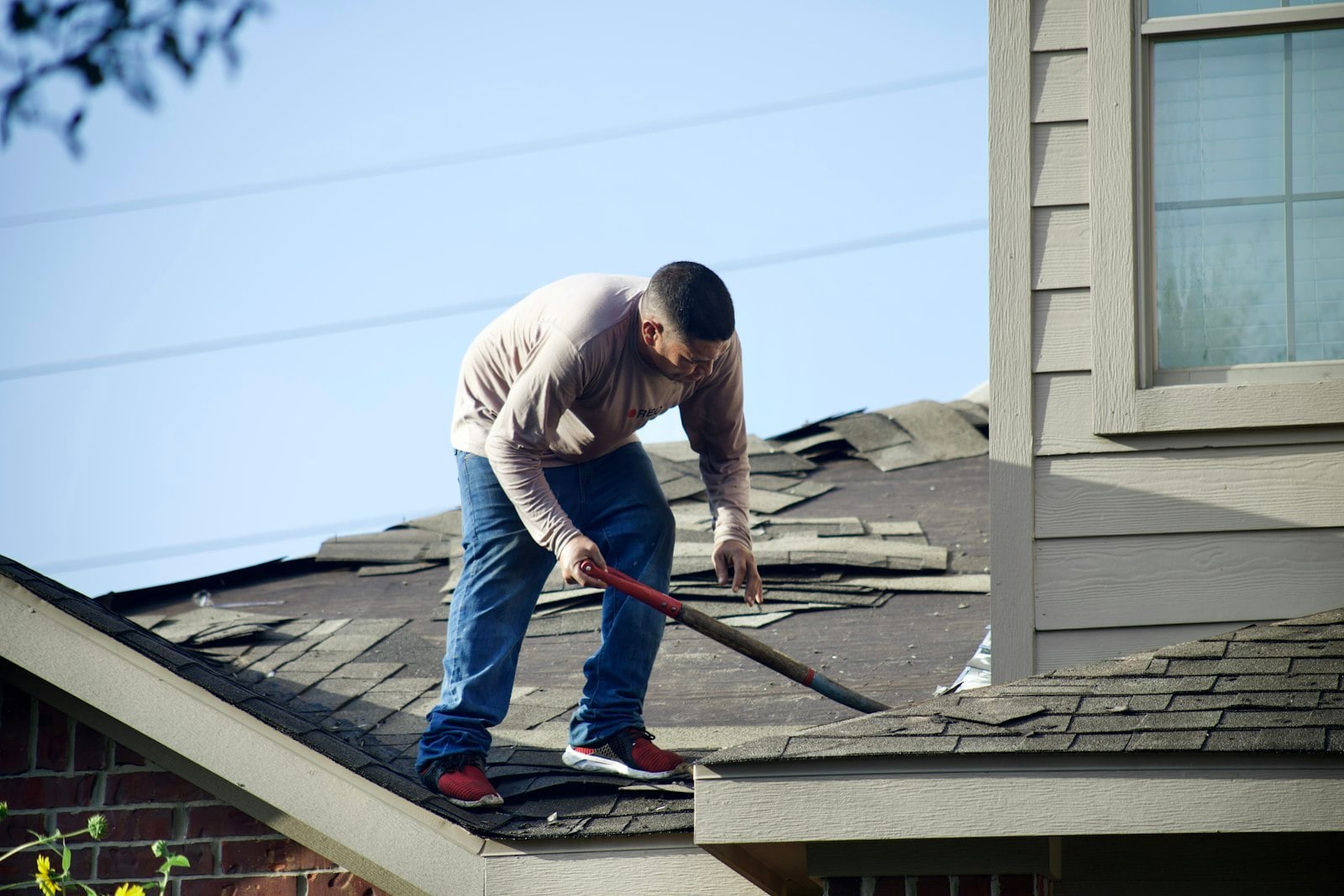
Several factors affect your roof repair estimate in Huntington Beach: the roofing material, how much of the roof is actually damaged, the roof's pitch and how hard it is to access, how urgently the work needs to happen, and the age and overall condition of the roof. None of these matter in isolation. A contractor weighs all of them together, which is why the same size repair can come back with two very different numbers depending on which of these factors are in play.
Roofing Material Moves the Number More Than Anything Else
Material is usually the single biggest factor in a repair estimate. Standard asphalt shingle repair sits on the lower end of the cost range because the material is inexpensive and widely stocked. A tile roof repair costs more, since matching tiles can be harder to source and each piece takes more care to remove and reset without cracking the ones around it. Flat roofing systems bring their own material and labor considerations, since the membrane or coating used affects both the repair method and the price.

How Much of the Roof Actually Needs Repair
A single missing shingle and a damaged section spanning several feet are not priced the same way, even on the exact same roof. Estimates typically scale with the square footage being repaired, plus whatever underlying layer, decking, or underlayment turns out to be affected once the damaged material is pulled back. This is also why an estimate given from a description over the phone is only ever a starting range, not a final number.
Roof Pitch and Access Change the Labor Side of the Estimate
A low pitch, easily walkable roof takes less time and less safety equipment to work on than a steep one. Steeper roofs require additional harnessing and slower, more careful movement, which adds labor time even when the repair itself is identical in size. Two story homes and roofs with limited ladder access add the same kind of time, since materials and tools take longer to move up and down safely. The same access and pitch factors apply directly to add-on work like skylight installation, not just repairs.

How Urgent the Repair Is
A scheduled repair booked a few days out is generally less expensive than the same job requested the same day, since same day work means pulling a crew off another job or working outside normal hours. If water is actively getting into the house, an emergency roof repair or temporary tarp is usually worth the premium to stop the damage from spreading, with the full repair scheduled once the leak is under control.
The Roof's Age and Overall Condition
An otherwise healthy roof with one isolated problem area is a straightforward, lower cost repair. A roof that is already near the end of its expected lifespan often has surrounding wear that affects the estimate too, since a contractor doing an honest roof inspection will flag nearby areas likely to fail soon rather than repairing one spot and leaving the next problem for next season. In some cases, the inspection reveals that a full roof replacement is actually the more cost effective path instead of a series of repeat repairs.

Local Factors That Shift Estimates in Huntington Beach
Coastal salt air and near constant sun exposure age roofing material faster here than in many inland areas, which can mean earlier repairs even on a roof that still looks fine from the street. Timing matters too. Booking repairs before the region's rainy season begins usually means more flexible scheduling and fewer surprises than trying to book the same repair once storms are already rolling through and every local crew is stretched thin.

What a Fair Estimate Should Include
A clear, honest estimate is written, not just quoted verbally, and should spell out:
- The specific material being used, not just a category like shingles or tile.
- Labor cost separated from material cost, so you can see where the number comes from.
- What happens if hidden damage is found once work begins.
- Any warranty on the work performed, and for how long it applies.
- Proof of an active CSLB contractor license, which you can verify directly before any work begins.
How to Get an Accurate Estimate for Your Roof
A rough range is possible from a phone description or a few photos, but an accurate number needs eyes on the actual roof. Damage hiding under a shingle or around a flashing point rarely shows up in a photo taken from the ground. If you are dealing with an active roof leak or recent storm damage, mentioning that upfront helps the contractor prioritize the visit and give you a number you can actually plan around.
Frequently Asked Questions
What is the single biggest factor in a roof repair estimate? +
Roofing material usually has the largest single impact, since materials like tile and metal cost more to source and take longer to repair than standard asphalt shingles. Extent of damage is a close second.
Does roof pitch really change the price that much? +
Yes. Steep roofs require additional safety equipment and slow down the work, which commonly adds a noticeable premium compared to the same repair on a low pitch, easily walkable roof.
Why do two estimates for the same repair sometimes come in so different? +
Estimates can differ based on how thoroughly the roof was inspected, what materials and warranty are included, whether the estimate accounts for hidden damage, and each contractor's labor rate. A very low estimate sometimes means something was left out.
Can I get an accurate estimate without an in person inspection? +
A rough range is possible from photos or a phone description, but an accurate estimate needs an in person look, since hidden damage under shingles or around flashing is common and changes the final number.
Knowing what goes into an estimate makes it a lot easier to compare quotes and spot the ones that leave something out. When you are ready for a real number instead of a guess, a quick on site look is the fastest way to get one.