

Granule loss on your roof is normal wear in small, steady amounts, especially on a newer roof or one nearing the end of its expected lifespan, and it only becomes a warning sign when it shows up as bald patches, heavy buildup after every rain, or noticeable loss on a roof under 10 years old. The gritty granules you see in your gutters are not automatically a problem. What matters is how much, how often, and how old the roof actually is.
What Granules Actually Do
Those small colored granules embedded in an asphalt shingle are not just for looks. They shield the asphalt layer underneath from direct UV exposure, add fire resistance, and give the shingle most of its actual weight and durability. Underneath the granules is a black asphalt mat that has very little protection of its own, which is exactly why granule loss matters once it goes past a normal, gradual amount.
Normal Granule Loss vs a Warning Sign
Context matters more than the granules themselves. Here is a quick way to read what you are seeing:
| Situation | What It Usually Means | Action Needed |
|---|---|---|
| Light dusting after a new roof install | Loose manufacturing granules washing off | None, expected in the first few rains |
| Small, steady amount on a roof 10 to 15 years old | Normal aging as shingles approach end of life | Keep monitoring, plan ahead for replacement |
| Heavy buildup on a roof under 10 years old | Premature wear or possible material defect | Schedule a professional inspection |
| Visible bald or shiny patches | Asphalt mat exposed, active deterioration | Inspection soon, repair likely needed |

Why New Roofs Shed Granules Too
If you just had a roof installed and noticed granules in the gutters or on the ground, that is usually not a defect. Manufacturing and handling leave a certain amount of loose granules on every shingle that never fully bonded to the asphalt, and these wash off during the first few real rain events. This is a short, one time cleanup phase, not an ongoing pattern, and it should taper off within the first couple of storms.
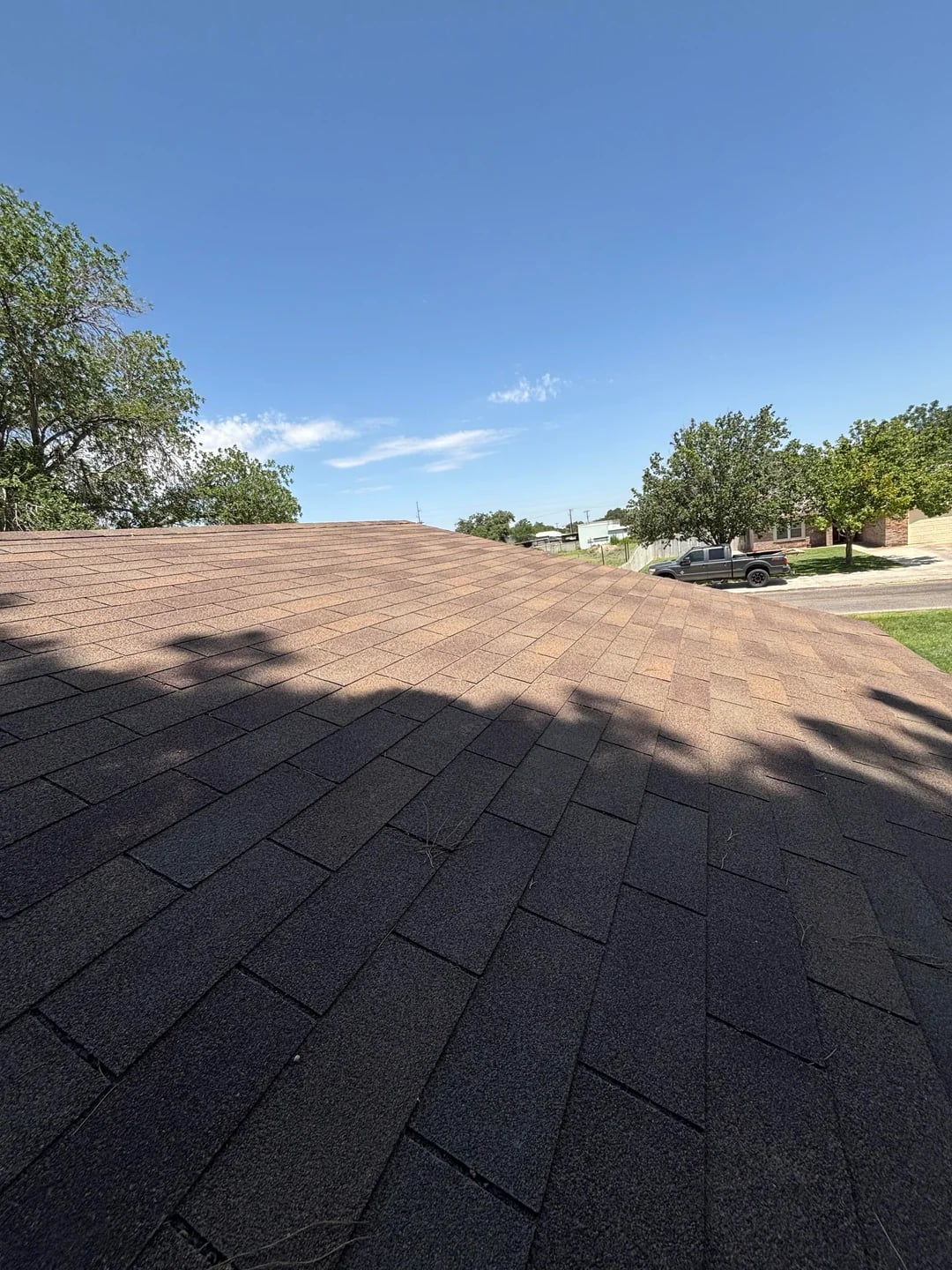
Warning Signs Your Granule Loss Isn't Normal
- Bald or bare patches where the black asphalt mat is clearly visible.
- Shingles that look unusually smooth or shiny in certain spots.
- A steady, repeating buildup of grit in the gutters after nearly every rain, not just once.
- Noticeable granule loss on a roof that is less than 10 years old.
- Uneven coloring across the roof, with some sections looking noticeably darker or more worn than others.
Common Mistakes Homeowners Make
- Pressure washing the roof to clean it, which strips off granules that were still protecting the shingle.
- Assuming any granules in the gutter mean the whole roof needs replacing right away.
- Ignoring a steady, repeating pattern of granule buildup because a single instance seemed minor.
- Never checking the gutters at all, which means the pattern of granule loss goes unnoticed for years.
Why Granule Loss Speeds Up in Huntington Beach
Constant direct sun is the biggest factor here. UV exposure gradually breaks down the asphalt binder holding granules in place, and south and west facing roof planes that get the most sun through the day tend to show wear first. Coastal salt air adds to the gradual breakdown as well, which is part of why roofs here often need a closer look sooner than the same shingle would inland.
How to Check Your Roof for Granule Loss Safely
You do not need a ladder to get a useful first read. Check your gutters and downspouts for gritty buildup after the next rain, and walk the perimeter of the house looking up at the roof from a few different angles. Binoculars help spot bald patches or uneven coloring without climbing anything. If something looks off, that is the point to bring in a professional rather than trying to get a closer look yourself.

When to Call a Professional
A quick roof inspection is the fastest way to know whether what you are seeing is ordinary aging or something that needs attention now. Isolated bald spots on an otherwise sound roof are often a straightforward shingle repair, while widespread granule loss on an older roof is a stronger signal that a roof replacement is coming up sooner rather than later. Either way, keeping your gutters clear makes it much easier to actually notice a pattern instead of missing it.

Preventive Maintenance Tips
- Check gutters for granule buildup a couple of times a year, especially before the rainy season starts.
- Skip pressure washing the roof entirely, use gentle, low pressure cleaning made for the material if cleaning is needed.
- Keep an eye on the roof's age relative to its expected lifespan, not just how it looks from the street.
- Address bald patches early, while they are still a contained repair instead of a bigger problem.
Frequently Asked Questions
Is it normal to find granules in my gutters? +
A light dusting is normal, especially in the first year or two after a new roof is installed, since loose manufacturing granules wash off early. A steady buildup year after year, or handfuls after every rain, points to shingles that are wearing down faster than they should.
How much granule loss is too much? +
As a rough guide, more than a light dusting in the gutters after storms, or any bald patch where the black asphalt mat is visible, is worth a closer look. On a roof under 10 years old, noticeable granule loss is more concerning than the same amount on a roof nearing the end of its expected life.
Can granule loss be fixed without replacing the whole roof? +
Isolated bald spots on an otherwise healthy roof can often be addressed with a targeted shingle repair. Granule loss spread across most of the roof usually means the shingles themselves are reaching the end of their service life, and repair alone will not solve that.
Does a new roof always shed some granules? +
Yes. Manufacturing and shipping leave some loose granules on new shingles that never fully bonded, and these typically wash off during the first few rains after installation. This is a one time event, not an ongoing pattern.
Why do shingles lose granules faster in Huntington Beach? +
Constant direct sun and UV exposure break down the asphalt binder that holds granules in place faster in a coastal climate like this one, especially on south and west facing roof planes that get the most sun through the day.
Can I pressure wash granule buildup off my roof? +
No. Pressure washing strips off granules that are still doing their job, which speeds up wear instead of preventing it. Roofs should be cleaned with gentle, low pressure methods made for the material, not a pressure washer.
What do bald patches on shingles actually mean? +
A bald patch is an area where the granules have worn away enough to expose the black asphalt mat underneath. That mat has little UV protection on its own, so a bald spot tends to age and fail faster than the rest of the roof around it.
Should I get an inspection just for granule loss? +
If you are seeing bald patches, a steady buildup in the gutters, or your roof is past the 10 year mark, a professional inspection is worth scheduling. It is a quick way to know whether you are looking at normal aging or a problem that needs attention now.
A few granules in the gutter now and then is nothing to worry about. A steady pattern, bald patches, or granule loss on a roof that is still relatively young is the roof telling you something worth listening to. When in doubt, a quick inspection settles it either way.