
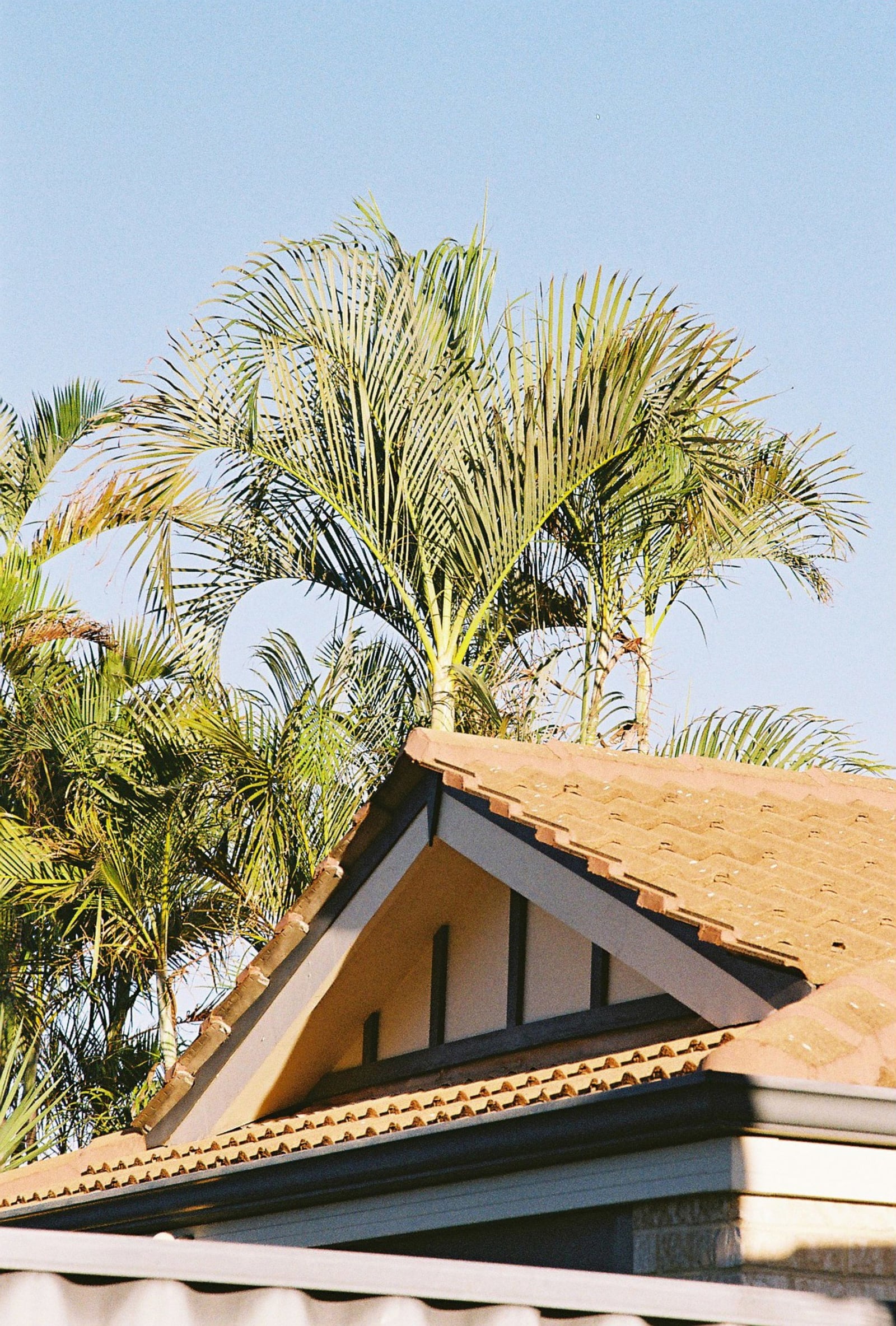
Palm trees are practically shorthand for Southern California, and plenty of Huntington Beach properties have at least one within striking distance of the roofline. They're not inherently a problem. What they drop, and how that debris behaves differently than a regular yard tree's leaves, is worth understanding if you own a home near one.
How Palm Fronds Actually Damage a Roof
A dead frond can be six feet long and surprisingly heavy once it's fully dried out. Falling from the height of a mature palm, especially during a wind event, that kind of impact is enough to crack roof tile, dent metal flashing, or damage shingles on contact. This isn't a rare, freak occurrence either. Our guide to how Santa Ana winds damage roofs covers flying debris as one of the more common failure points during a strong wind event, and palm fronds are frequently the debris in question.
Why Palm Debris Clogs Gutters Differently Than Regular Leaves
Palm debris doesn't behave like the leaf litter most gutter systems are designed around. Fronds are large, fibrous, and often slip through standard gutter guards that handle typical leaves without issue, while the seed clusters palms shed add their own separate clogging problem. Once a gutter is blocked, water backs up under the fascia and roof edge instead of draining away, which is exactly the setup for wood rot at the eave and, eventually, roof deck damage that has nothing to do with the shingles themselves failing. That same lingering moisture, especially on shaded sections of roof, is also what lets moss take hold and start rooting into the shingles.

The Trimming Schedule That Actually Protects Your Roof
The general gutter maintenance rule is twice a year, once in late spring after the last winter rain to clear out what accumulated during storm season, and again in October or November ahead of the next one. Homes near mature palms often need an additional mid-year check, since fronds don't shed on the same predictable seasonal schedule regular trees do. On the tree side, late summer trimming is the move, clearing dead fronds before the September through March window when Santa Ana wind events become a real factor.

Who's Liable If a Neighbor's Palm Damages Your Roof
This comes up more often than you'd expect in a neighborhood with mature landscaping on shared property lines. Generally, a tree owner is only responsible for damage if some failure to maintain the tree actually contributed to it, an obviously dead, overhanging frond that was never trimmed, for example. Damage from a genuinely unforeseeable failure tends to be treated differently. If a dispute comes up, photograph the damage and the tree's condition before any cleanup happens, since that documentation matters more than it might seem to in the moment.

Signs Your Roof Has Already Taken Frond Damage
Look for cracked or displaced tile, dented flashing or vents, and granule loss on shingles concentrated near overhanging branches rather than spread evenly across the roof, which points to impact rather than general wear. Gutters that overflow during a normal rain, not just a heavy storm, are usually a sign of a clog worth checking before it causes the kind of hidden fascia and deck damage that's far more expensive than a gutter cleaning would have been.
Frequently Asked Questions
Do palm trees actually damage roofs? +
Yes, in two main ways. A heavy dried frond falling from height can crack tile or dent metal on impact, and palm debris clogs gutters differently than regular leaves, often slipping through standard gutter guards that work fine against smaller leaf litter.
How often should I clean gutters if I have palm trees nearby? +
Twice a year is the general standard, once in late spring after winter rain ends and again in October or November before the rainy season starts, but homes with mature palms nearby often need a mid-year check too, since fronds drop somewhat continuously rather than in one seasonal window.
Can gutter guards stop palm fronds from clogging my gutters? +
Standard gutter guards help with typical leaf debris, but palm fronds and their fibrous seed clusters can still work through some guard designs. It's worth confirming with your gutter installer whether a specific guard product is rated for palm debris, not just general leaf litter.
Am I responsible if my neighbor's palm tree damages my roof? +
Generally, the tree owner is only responsible for damage if a failure to properly maintain the tree contributed to it, such as ignoring an obviously dead, overhanging frond. Damage from a genuinely unforeseeable event is usually treated differently, so documentation matters if a dispute comes up.
When is the best time to trim palm trees before storm season? +
Late summer, ahead of the September through March window when Santa Ana wind events become common, is the ideal timing, since it removes dead fronds before the winds that are most likely to knock them loose.
None of this is a reason to rethink the landscaping. It's a reason to put gutter checks and frond trimming on the same calendar as everything else that protects a roof, rather than treating a palm tree as scenery that takes care of itself.