
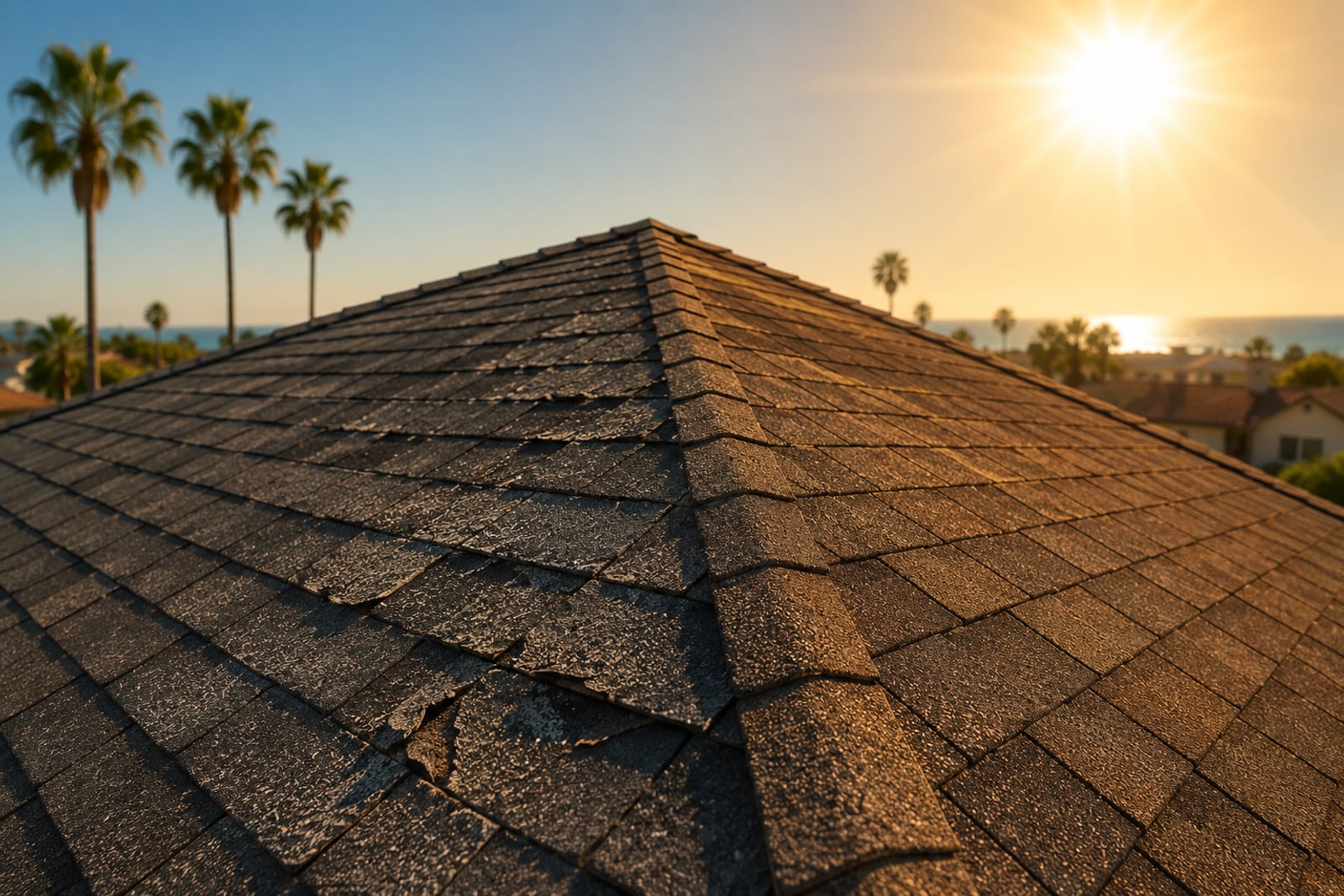
UV and sun damage age a Southern California roof faster mainly through two processes working together: photooxidation, which breaks down the oils and binders in asphalt shingles, and thermal cycling, where daily heating and cooling expands and contracts roofing material until it cracks. Between the two, roofs in consistently sunny climates like ours commonly lose 5 to 10 years off their expected lifespan compared to the same roof in a cooler, less sunny region.
Why Southern California Sun Is Harder on Roofs Than You'd Think
It is easy to underestimate just how hot a roof surface actually gets. On a clear summer day here, roof surfaces regularly reach 150 to 180 degrees Fahrenheit even when the air temperature is only in the 80s or low 90s. That surface heat, combined with near constant sun exposure most of the year, puts roofing material through conditions that materials rated for milder climates were never really built to handle long term.
Photooxidation: What's Actually Happening to Your Shingles
The technical process behind most UV related roof aging is called photooxidation, and it targets the oils and binders that give asphalt shingles their flexibility. As those oils break down under UV exposure, the asphalt becomes drier and more brittle. Granules that protect the asphalt underneath thin out over time, and once they do, the exposed asphalt heats up even more and the process speeds up further. It is a slow, self reinforcing cycle rather than a single event.
Thermal Cycling: The Daily Expand and Contract Cycle
Every roof heats up through the day and cools back down at night, and each of those swings causes roofing material to expand and contract slightly. Over a single summer, a roof here can go through 90 or more of these cycles. Individually they are minor, but repeated day after day, thermal cycling cracks sealants, loosens fasteners, and stresses shingles at their edges, which is a big part of why curling and splitting tend to show up gradually rather than all at once.

Signs of UV and Sun Damage on Your Roof
- Shingle edges curling upward or clawing at the corners.
- Cracking or splitting, especially on older shingles that have lost their flexibility.
- Granule loss and bald patches where the black asphalt mat is visible.
- Blistering, where trapped heat creates small raised pockets on the shingle surface.
- Noticeable fading or uneven color, particularly on south and west facing planes.
How Different Roofing Materials Handle Sun Exposure
| Material | UV Resistance | Common Sun Damage Sign |
|---|---|---|
| Asphalt Shingle | Moderate, depends on granule coverage | Curling, cracking, granule loss |
| Clay or Concrete Tile | High for the tile itself | Underlayment aging beneath the tile |
| Flat Roof Membrane | Varies by material (TPO, EPDM) | Brittleness, seam stress, cracking |
A tile roof handles direct UV noticeably better than asphalt shingles, since the tile material itself does not depend on granules or an asphalt binder the way shingles do. That does not make tile immune to sun related aging though, since the underlayment beneath the tiles is still exposed to the same heat cycling and gradually ages even while the tiles on top look fine. Flat roof membranes fall somewhere in between, with UV resistance varying quite a bit depending on the specific material.


Common Mistakes Homeowners Make
- Treating fading as purely cosmetic instead of an early signal to check nearby shingles for curling or cracking.
- Not checking attic ventilation, which lets heat build up and speeds up damage from below as well as above.
- Waiting for a leak before addressing sun damaged shingles that were already showing warning signs for months.
- Assuming a tile roof needs no attention just because the tiles themselves look fine on the surface.
How Proper Ventilation Slows Sun Damage
Attic ventilation matters more for sun damage than most homeowners realize. A well ventilated attic lets built up heat escape instead of radiating back up into the roof deck, which reduces the temperature swings driving thermal cycling from underneath. A poorly ventilated attic effectively cooks the roof from both directions at once, and the difference in wear between a well ventilated and poorly ventilated roof of the same age and material is often significant.

Preventive Maintenance Tips
- Have attic ventilation checked as part of any roof inspection, not as an afterthought.
- Walk the yard periodically and look at south and west facing roof planes specifically, since they show wear first.
- Address curling or cracked shingles while they are still isolated, before nearby shingles follow.
- Consider a lighter, more reflective shingle color at replacement time if sun exposure has been a recurring issue.
When to Call a Professional
Isolated curling or a few cracked shingles on an otherwise sound roof is usually a contained shingle repair. If you are also noticing signs covered in our granule loss guide, or curling across multiple sections as described in our post on spotting curling shingles from the ground, that is a stronger sign the roof has taken on more sun damage than a single repair will fix. A professional inspection can confirm whether you are looking at a repair or whether a full replacement makes more sense given the roof's age.
Frequently Asked Questions
How much does sun exposure actually shorten a roof's life? +
In consistently sunny climates like Southern California, roofs commonly lose 5 to 10 years off their expected lifespan compared to the same material in a cooler, less sunny region. The exact impact depends on the roof's orientation, material, and attic ventilation.
What is photooxidation and why does it matter for my roof? +
Photooxidation is the chemical breakdown of the oils and binders in asphalt shingles caused by UV exposure. As it progresses, shingles lose flexibility and granules, become more brittle, and are more prone to cracking and curling.
Which side of my roof ages fastest from sun exposure? +
South and west facing roof planes usually age fastest, since they receive the most direct sun through the hottest part of the day, especially in the afternoon when temperatures peak.
Can better attic ventilation really slow down sun damage? +
Yes. Proper attic ventilation helps the roof deck shed heat instead of trapping it, which reduces the temperature swings driving thermal cycling. Well ventilated attics can meaningfully extend a roof's service life compared to a poorly ventilated one.
Do lighter colored shingles hold up better in the sun? +
Generally yes. Lighter and more reflective shingle colors absorb less heat than dark shingles, which reduces surface temperature and can slow down the thermal cycling and photooxidation process somewhat, though material quality still matters more.
Is fading on my shingles just cosmetic or an actual problem? +
Fading itself is mostly cosmetic, but it is often a visible sign that the same UV exposure causing the color change is also breaking down the asphalt underneath. Fading is worth treating as an early signal to check for curling, cracking, or granule loss nearby.
Does tile roofing avoid sun and UV damage entirely? +
Tile handles direct UV better than asphalt shingles since the material itself does not rely on granules or an asphalt binder, but the underlayment beneath the tiles still ages from heat and sun exposure over time and eventually needs attention.
What is the single best thing I can do to slow sun damage? +
Keeping attic ventilation working properly and scheduling a roof inspection every year or two are the two most effective, low cost habits, since they catch heat related wear early instead of letting it progress unnoticed.
Sun exposure is not something you can stop, but it is something you can plan around. Keeping an eye on south and west facing sections, staying on top of attic ventilation, and catching curling or cracking early are what actually separate a roof that lasts its full expected lifespan from one that does not.