
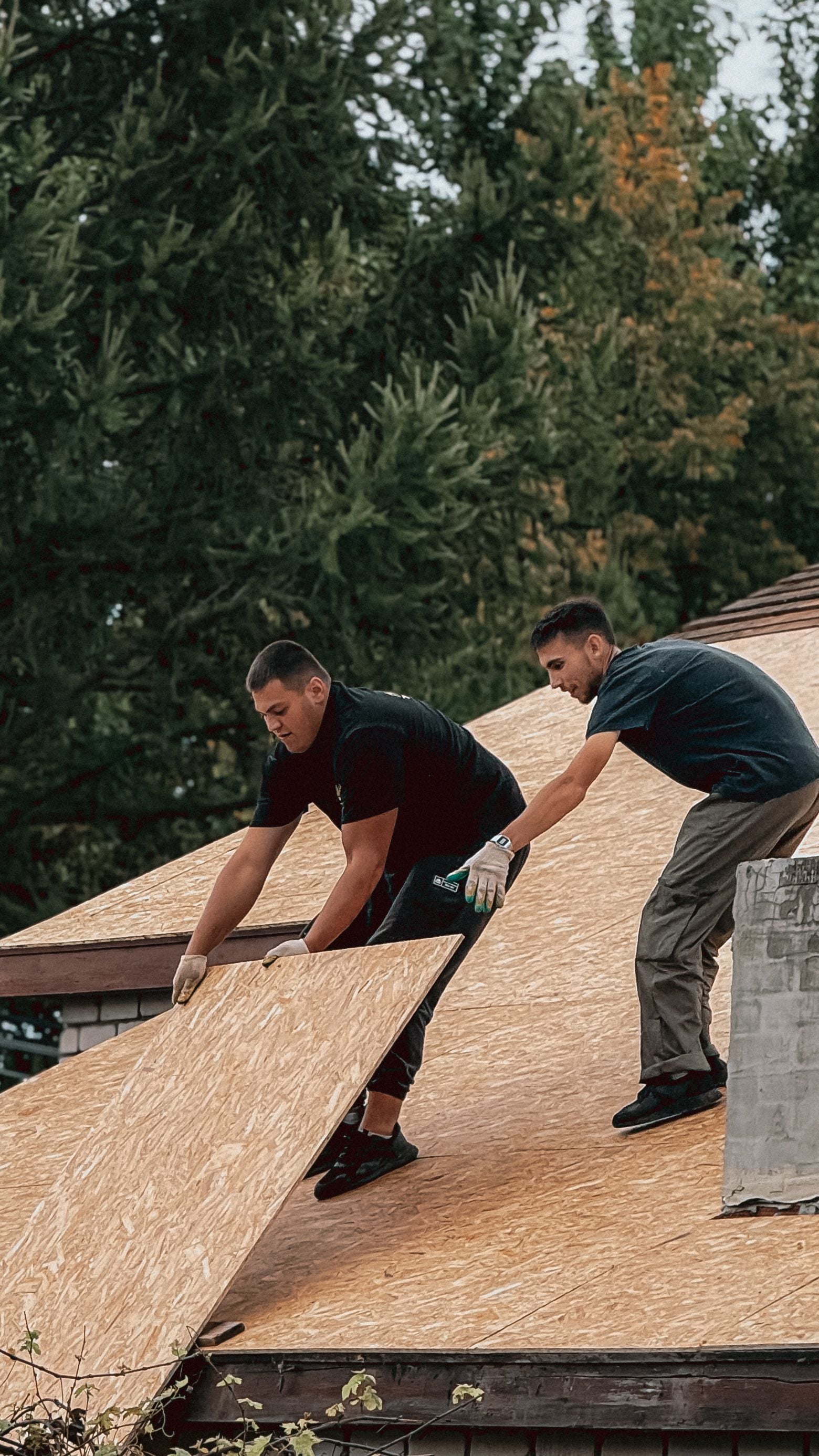
Shingles get all the attention because they're what you can see from the ground. But underneath them is the roof decking, the plywood or OSB sheathing that everything else is nailed to, and when that layer is compromised, no amount of new shingles on top fixes the underlying problem.
What Roof Decking Actually Is
Decking, also called sheathing, is the structural wood layer, typically plywood or OSB, fastened across the rafters or trusses that forms the actual shape of the roof. Shingles, underlayment, and flashing all sit on top of it. It's the part of the roof that gives everything else something solid to attach to, and it's also the first layer to absorb moisture when a leak goes undetected.
The Signs Worth Paying Attention To
A soft or spongy feel when walking across the roof is the clearest sign, healthy decking is rigid and doesn't give underfoot. From inside the attic, look for a visible sag or wave between rafters, dark staining on the underside of the wood, or daylight coming through where it shouldn't. A leak that keeps returning to the exact same spot even after a shingle repair is also a strong indicator that the deck itself, not just the surface layer, is holding moisture.

What Causes It in the First Place
Rot is almost always a moisture problem that went unnoticed for a while, a slow leak at a flashing point, a worn valley, or shingles that failed months before anyone caught it. Our guide on how a small leak becomes a bigger structural problem covers this progression in more detail. Poor attic ventilation makes it worse, trapping humidity against the underside of the deck even without an active leak, which is part of why attic ventilation affects how long a roof actually lasts.

What Replacement Actually Costs
Decking replacement generally runs $2 to $5 per square foot installed, or roughly $80 to $140 per 4x8 sheet including material and labor when the damage is limited to a section. Most of the time, only the affected sheets need to come out, not the entire deck, as long as the surrounding wood tests sound. This is exactly the kind of line item our guide on hidden costs in roof repair budgeting warns homeowners to leave room for, since it's rarely visible until the old roofing material is already off.

Why It's Rarely Known Until the Roof Is Opened Up
A visual inspection and an attic walk catch the obvious cases, but some decking damage is only discovered once the old shingles and underlayment are stripped away during a re-roof. That's why experienced contractors build a contingency line into estimates for exactly this scenario, and why it's worth asking upfront how that contingency is priced rather than being surprised by it mid-project.
Frequently Asked Questions
How do I know if my roof decking needs to be replaced? +
A soft or spongy feel when walking on the roof, visible sagging or a wavy line between rafters when viewed from the attic, and a leak that keeps recurring in the same spot are the clearest signs. Healthy decking is rigid and firm underfoot.
How much does roof decking replacement cost? +
Decking replacement generally runs $2 to $5 per square foot installed, or roughly $80 to $140 per 4x8 sheet including material and labor for a localized repair, depending on the extent of the damage and how much is affected.
Can decking be replaced without replacing the whole roof? +
Yes, in most cases. If the damage is limited to a section, a contractor can cut out and replace just the affected sheets rather than the entire deck, as long as the surrounding wood is sound.
What causes roof decking to rot? +
Prolonged moisture exposure is the main cause, usually from a slow leak at flashing, a valley, or worn shingles that went unnoticed for months or years, combined with poor attic ventilation that traps humidity against the underside of the deck.
Will my roofer know if the decking is bad before they start? +
Not always with full certainty. A visual inspection and an attic walk can catch obvious signs, but some rot is only discovered once the old shingles and underlayment are stripped away, which is why estimates often include a contingency for decking replacement.
Decking is easy to overlook because it's the one part of a roof most homeowners never actually see. But it's the foundation everything else depends on, and catching a problem early, before it spreads under a full section, is almost always the cheaper outcome.